

How a cell phone charger helped save a Covid patient's life
How a prison cell telephone charger helped save a Covid patient'due south life
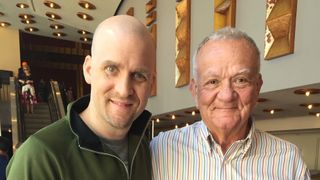
In March at the beginning of the coronavirus pandemic, 77-yr-old Dr. Steven Hefler began to feel ill later returning to Florida from San Diego. Little did he know that he was going to spend 49 days in the hospital — 23 of them on a respirator. What's more, he had no easy fashion to contact his family, every bit his smartphone had run out of power.
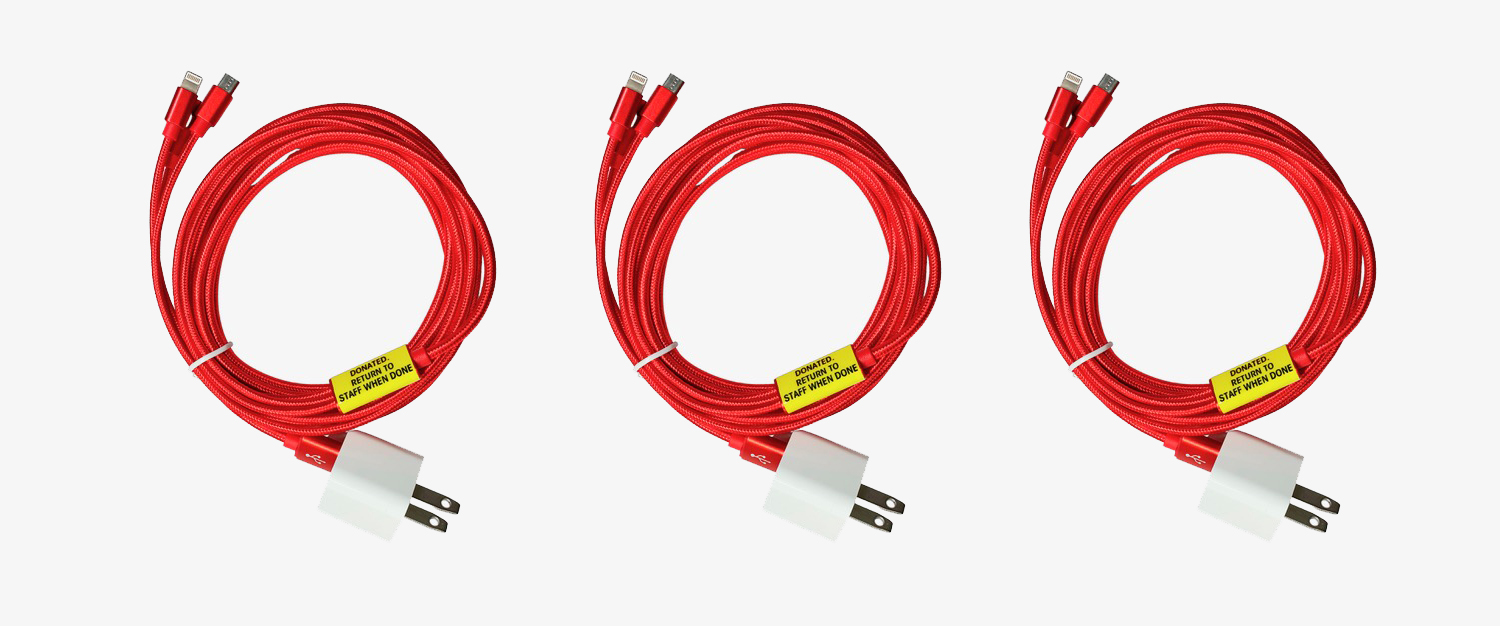
Well-nigh of the time, a dead smartphone is a minor inconvenience, as we're often not far from an outlet or a portable charger. Or, information technology'south a simple affair of swinging into a convenience store to choice upwards a spare charger.
Nevertheless, when you've got to blitz to the infirmary for urgent COVID-19 treatment, you don't always have the time to assemble upwards belongings you might need — including a charger for their smartphone. And, considering of the viral nature of COVID, in-person visits are discouraged, making vocalism- and video calls the merely manner to meet loved ones.
That's just what Dr. Hefler was facing every bit he was admitted to Sarasota Memorial Infirmary. His condition rapidly deteriorated, and he lapsed into unconsciousness for a week in the intensive care unit; doctors had to resuscitate him three times.
Even though he was unconscious, Dr. Helfer's family wanted to talk to him over his phone, to provide a reassuring and familiar vocalisation. Fortunately, a nurse had a spare charger, which provided a lifeline for Hefler in more ways than one.
"When [my son] Jonathan would phone call, when my wife would phone call, my heart rate went upward and my claret pressure went up even though I was uncommunicative," Dr. Hefler said.
When [my son] Jonathan would call, when my married woman would call, my heart rate went up and my blood pressure went up even though I was uncommunicative.
Dr. Steven Hefler
"I got my kids on the phone and they yelled at him, 'don't give upwardly, continue fighting," said Jonathan Hefler. When the nurses reported on Dr. Hefler's comeback, "nosotros started doing that at all hours of the day and dark."
Based on that experience and a desire to do something, Jonathan Helfer realized that at that place were probably a proficient many families in the aforementioned state of affairs: A loved i in the hospital, and no way to reach them.
While his father was yet in the hospital, Jonathan started a GoFundMe folio to purchase telephone chargers that he could then distribute to hospitals in demand. He also partnered with Megan Tress, a nurse practitioner based in Chicago, to observe hospitals where they could donate chargers. That page alone raised more than $41,000, which was used to purchase a few m chargers.
In early May, Jonathan discovered Dr. Vic Gulati and Dr. Bhavesh Mody, who had been doing something similar in the San Diego expanse, and the three combined forces to create ChargePower.org, a nonprofit that distributes the chargers to hospitals upon request. Partners include the Giving Back Fund, a national nonprofit system, and Classy Chargers, the visitor providing the USB chargers.
As anyone who's purchased a phone charger in an airport knows, not all chargers are created equal. Diane Attyah, the owner of Swish Chargers, was able to not simply source chargers that would work with 99% of all smartphones, but make sure they were packaged properly.
If a doctor or nurse can FaceTime with a patient in a room, then that's i prepare of gloves or masks that can exist used elsewhere.
Early, Hefler was simply ownership chargers off of Amazon and mailing them to hospitals. At the same fourth dimension, Attyah'due south ain business was suffering. As a wholesaler, she was sitting on a huge inventory of telephone chargers every bit most of her customers — local stores — were airtight due to the pandemic. And so she reached out to Hefler and offered to assistance.
Attyah'due south expertise extended beyond her warehouse of chargers, also. Because of her connections, she was able to source changing cables with three ends — microUSB, USB-C, and Lightning — so that nurses didn't accept to worry about which patient was getting which charger.
Afterwards consulting with Dr. Gulati and Dr. Mody, Attyah increased the cables' length to x feet — long plenty to reach from the wall to a hospital bed comfortably — label the chargers so that people didn't take them from the hospital, and bundle them in boxes with instructions for nurses on how to use them.
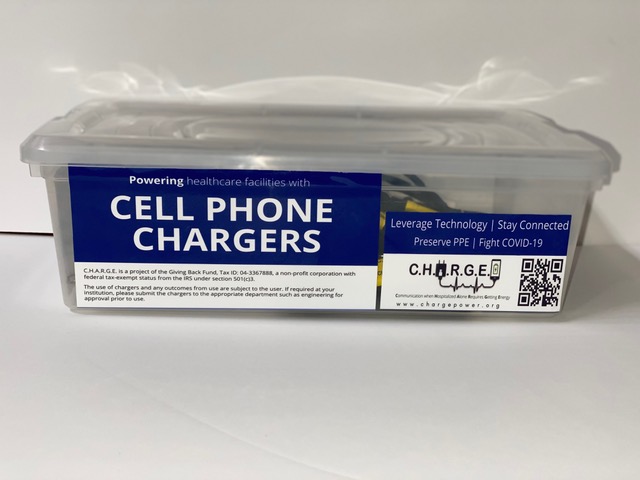
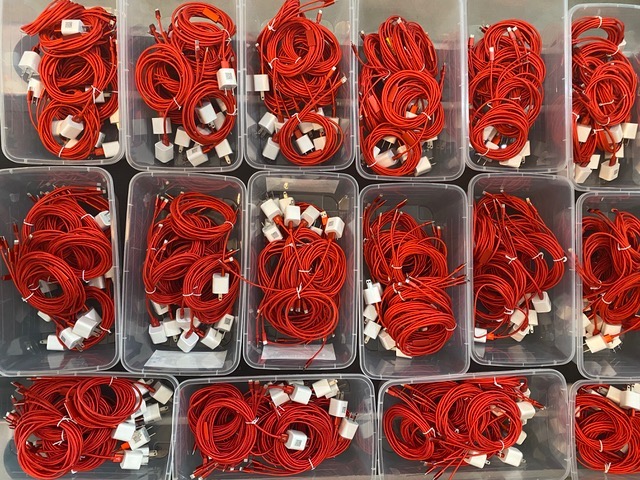
"We don't just send hospitals boxes of loose chargers," Hefler said. "We ship specific types of chargers with all sorts of special stickers and special holding tubs and instructions so that they are easy to use and re-apply past any hospital staff."
Some other benefit of the chargers, Hefler said, is that it besides helps hospitals save on PPE; if a doctor or nurse tin FaceTime with a patient in a room, and then that's 1 set of gloves or masks that can be used elsewhere.
According to Hefler, Charge Power has distributed more than 10,000 chargers to 87 hospitals beyond the country. Cheers to a $300,000 donation from Covid Tech Connect in October, Charge Power was able to order an additional 25,000 chargers, which should arrive in the U.Due south. past belatedly Jan.
As for Jonathan's begetter? He recovered and was released from the hospital on May xv. While he still has some lingering effects, he's grateful to be "on this side of the dirt." Of the 18 people in his age grouping that were admitted to the infirmary at the aforementioned time every bit Dr. Hefler, he was ane of only two people who left the hospital live. And while Dr. Hefler wouldn't wish his ordeal on anyone, he's thankful that something good came out of his affliction.
During his hospital stay, his wife Marsha, kept a periodical. Reading it afterwards, Dr. Hefler was struck by the toll the virus has taken not just on those infected, but by their loved ones.
"The people who are on the outside are the ones who are really suffering," Drl Hefler said, "And so this charger concern is truly a godsend, and I'm so proud of them for thinking about it, realizing it was a need, and making it happen."
If you'd like to donate to Accuse Power or asking phone chargers for your hospital or health arrangement, please go to chargepower.org .

Source: https://www.tomsguide.com/features/how-a-cell-phone-charger-helped-save-a-covid-patients-life
Posted by: martinthaddle.blogspot.com
0 Response to "How a cell phone charger helped save a Covid patient's life"
Post a Comment