

How To Repair Scratches In Plexiglass
Acrylic – also known equally Plexiglass, Perspex, and Lucite – is a popular blazon of plastic to use due to its many advantages. For example, clear acrylic sheets accept exceptional optical clarity, while colored acrylic sheets are bachelor in a spectrum of colors. Unfortunately, when compared to stronger plastics like polycarbonate, plexiglass scratches more easily. This creates not only a visually unappealing advent but also amercement the acrylic's immovability. Thankfully, it'due south often much easier to repair acrylic than information technology is to create scratches in the outset place.
Removing surface scratches from acrylic only requires a few simple tools and a bit of conclusion. In this how-to guide, nosotros volition walk through how to evaluate scratches and provide instructions for repairing low-cal and moderate scratches in acrylic.
Begin by Evaluating the Scratched Acrylic
Earlier you begin repairing scratches in acrylic, it's of import to make sure the acrylic is actually scratched. Make sure you're not but looking at "crazing." Did these scratches mysteriously appear shortly later cleaning the acrylic with chemical-based cleaners? If so, this is likely an unfortunate issue of chemic damage – non scratching. Crazing requires a lot of aggressive sanding and polishing to fix, and oft never looks good as new. It's more often than not advised that you purchase a new sheet if the crazing is significant.
Once you take determined your plexiglass is scratched, you and then need to determine the depth of the scratch – this volition assist you identify the best removal technique.
To evaluate the depth of scratches, lightly run your fingernail over the scratched portion of acrylic. If the scratch caught your fingernail, then information technology's a deep scratch. If the scratch is deep, effort to judge how deep it is. Any scratches deeper than v mm are exceptionally heavy scratches – these are generally regarded as irreparable, and can merely occasionally exist repaired past specialty buffing tools.
Deep cracks cannot hands be fixed. If cracked acrylic must be fixed, there are a few ways to mucilage acrylic together. Nonetheless, this won't necessarily join the acrylic cleanly, and some mucilage residue may be visible. If this isn't suitable for your acrylic'southward use instance, there's not very much to be done – we would recommend purchasing a new acrylic sail, or purchasing a stronger plastic like polycarbonate.
Removing Light Plexiglass Scratches
It'due south piece of cake to repair acrylic that has light surface scratches, which generally effect from regular habiliment-and-tear. To begin, get a few bones items fix:
- Acrylic cleaner (nosotros recommend Novus No. 1)
- Acrylic smoothen (we recommend Novus No. 2)
- Sandpaper (800 and 1200 grit)
- H2o for the sandpaper
- Clean soft cotton wool or microfiber material
Get-go, we will clean the acrylic. If there are modest amounts of dirt on the acrylic, the acrylic will likely become more than scratched during the repair process. For best results, we recommend spraying a special acrylic cleaner like Novus No. 1 on the acrylic. However, warm water and mild dish detergent will also exercise an adequate job. And then, use the cotton or microfiber textile to gently clean the area. Rinse the acrylic with warm water and utilize a dry microfiber or cotton fiber cloth to remove excess water.
Take a good await at these mild scratches. If the scratches are just visible upon close inspection, sandpaper may non be necessary. Instead, use an abrasive acrylic polish (we recommend Novus No. two) directly on the scratched expanse and apply consistent, moderate pressure to a clean, soft rag. Movement information technology in a circular motion until you lot tin't see the scratches. This could accept a few minutes, so don't panic if the scratches don't disappear immediately. When yous believe the acrylic is smoothen, gently wipe off the chemical compound with a make clean cotton fiber or microfiber towel.
If some scratches are still visible, become the sandpaper, water, acrylic polish, and a fresh, clean cotton or microfiber cloth. Then, follow these steps:
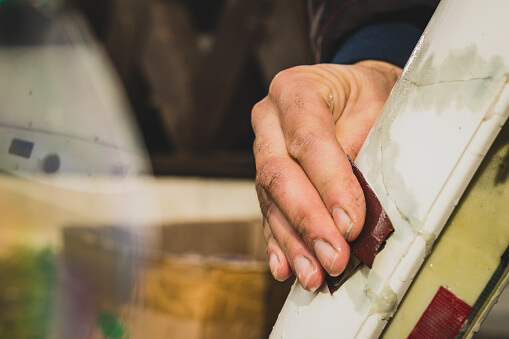
- Wet a piece of 800 grit sandpaper, and rub it onto the scratched portion in a circular motility.
- Use a slice of dry out 800 grit sandpaper, and rub it onto the aforementioned portion in a circular motility.
- Alternate between the above two steps for nearly three minutes. Your acrylic may withal await scratched – but nosotros're not done all the same!
- Wet a piece of 1200 grit sandpaper, and lightly rub it into the scratched portion.
- Utilize a piece of dry out 1200 grit sandpaper, and go over the in a higher place potion once again.
- Alternate betwixt the above two steps until you lot believe there are no more scratches.
- Take a dry, clean cotton fiber or microfiber cloth. Wipe away any fragments. Warning: A muddy cloth could scratch the acrylic again!
- Now, employ Novus No. 2 to the sanded area. Gently use a clean material to rub it in.
- Gently wipe off the remaining Novus No. 2 with a make clean, damp towel.
At this indicate, your acrylic should wait shiny and every bit good every bit new. If you can still meet a crack – the scratch was probable deeper than a low-cal scratch.
Removing Moderate & Deep Plexiglass Scratches
The procedure to repair deeper scratches is similar to the process to repair light scratches, except we're calculation 2 more items – 600 grit sandpaper and Novus No. 3. Collect the following items:
- Acrylic Polish (we recommend all 3 Novus products)
- Clean, soft cotton or microfiber cloth
- Sandpaper (600, 800 and 1200 grit)
- H2o for the sandpaper
Make sure that the acrylic sheet is cleaned either with dish soap or Novus No. one. Then, follow this process to remove moderately deep (under v mm) scratches from acrylic:
- Wet a piece of 600 dust sandpaper, and rub it onto the scratched portion in a circular movement.
- Use a piece of dry 600 grit sandpaper, and rub it onto the same portion in a circular motility
- Alternate between the above two steps for virtually four minutes. Your acrylic will look rough – this is fine.
- Wet a piece of 800 grit sandpaper, and rub it onto the scratched portion in a circular motion.
- Apply a piece of dry 800 grit sandpaper, and rub it onto the same portion in a circular movement
- Alternate between the above two steps for about three minutes.
- Wet a piece of 1200 grit sandpaper, and lightly rub it into the scratched portion in a circular motion.
- Employ a slice of dry 1200 grit sandpaper, and become over the to a higher place potion once again in a circular motion.
- Alternate between the above 2 steps until you believe there are no more scratches.
- Accept a dry, clean cotton or microfiber cloth. Wipe abroad any fragments Alert: A dirty fabric could scratch the acrylic all once again!
- Spray Novus No. 3 to the sanded surface area. Gently use a clean cloth to polish with a firm, back and forth move.
- Remove all remaining Novus No. 3 with a clean cloth.
- Apply Novus No. 2 to the area. Gently use a clean cloth in a business firm, back and along move.
- Use a material to wipe away any remaining cleaner.
- Afterwards post-obit this process, your acrylic should appear scratch-gratis. Polish the plastic using Novus No. 1 for best results.
Retrieve, extremely deep cracks cannot easily be stock-still. If croaky acrylic must be stock-still, there are a few means to glue acrylic together. However, this won't necessarily join the acrylic cleanly, and some glue rest may exist visible. If this isn't suitable for your acrylic's use case, in that location's not very much to be done. We – we would recommend purchasing a new acrylic sheet, or purchasing a stronger plastic like polycarbonate.
Final Thoughts
Whether acrylic plastic is being used for home use or commercial use, information technology'south an unfortunate reality that it may accidentally become scratched. Fortunately acrylic's physical backdrop allow information technology to easily be buffed with special, slightly abrasive solutions. If a scratch is less than v mm deep, it'due south a simple procedure to fix acrylic.
If your acrylic has sustained an uncommonly deep scratch, has been cracked, or undergone intense crazing, it may be time for a new slice of acrylic. To observe the best possible replacement slice, visit our acrylic plastic page, or view our choice of cut-to-size acrylic. If yous take any further questions virtually acrylic, contact us today.
Source: https://www.acmeplastics.com/content/how-to-remove-scratches-from-plexiglass/
0 Response to "How To Repair Scratches In Plexiglass"
Post a Comment